What Temp Do I Cook Ham At
So there I was, Easter Sunday, staring at a glistening, honey-glazed ham like it was a sacred artifact. I’d spent hours scoring the fat, studding it with cloves, and making a...
So there I was, Easter Sunday, staring at a glistening, honey-glazed ham like it was a sacred artifact. I’d spent hours scoring the fat, studding it with cloves, and making a glaze that promised caramelized perfection. I slid it into the oven, cranked it to 350°F because that’s what my grandma’s recipe said, and waited. Three hours later, I pulled out a salt lick that would have made a Roman soldier weep. The outside was a beautiful bronze, but the inside? Sahara dry. My guests chewed politely, reaching for more water than I’ve ever seen. That’s when I learned the hard way: temperature is the only god in ham cooking, and I had been worshipping the wrong one.
That day, I swore an oath to the meat thermometer. See, ham isn’t like a steak where you can kind of wing it. It’s already cooked, people! Most hams you buy are fully cooked, smoked, or cured. You’re not actually “cooking” it; you’re reheating it. And reheating has a very specific sweet spot. Treat it like a delicate guest, not a raw turkey you’re wrestling into submission.
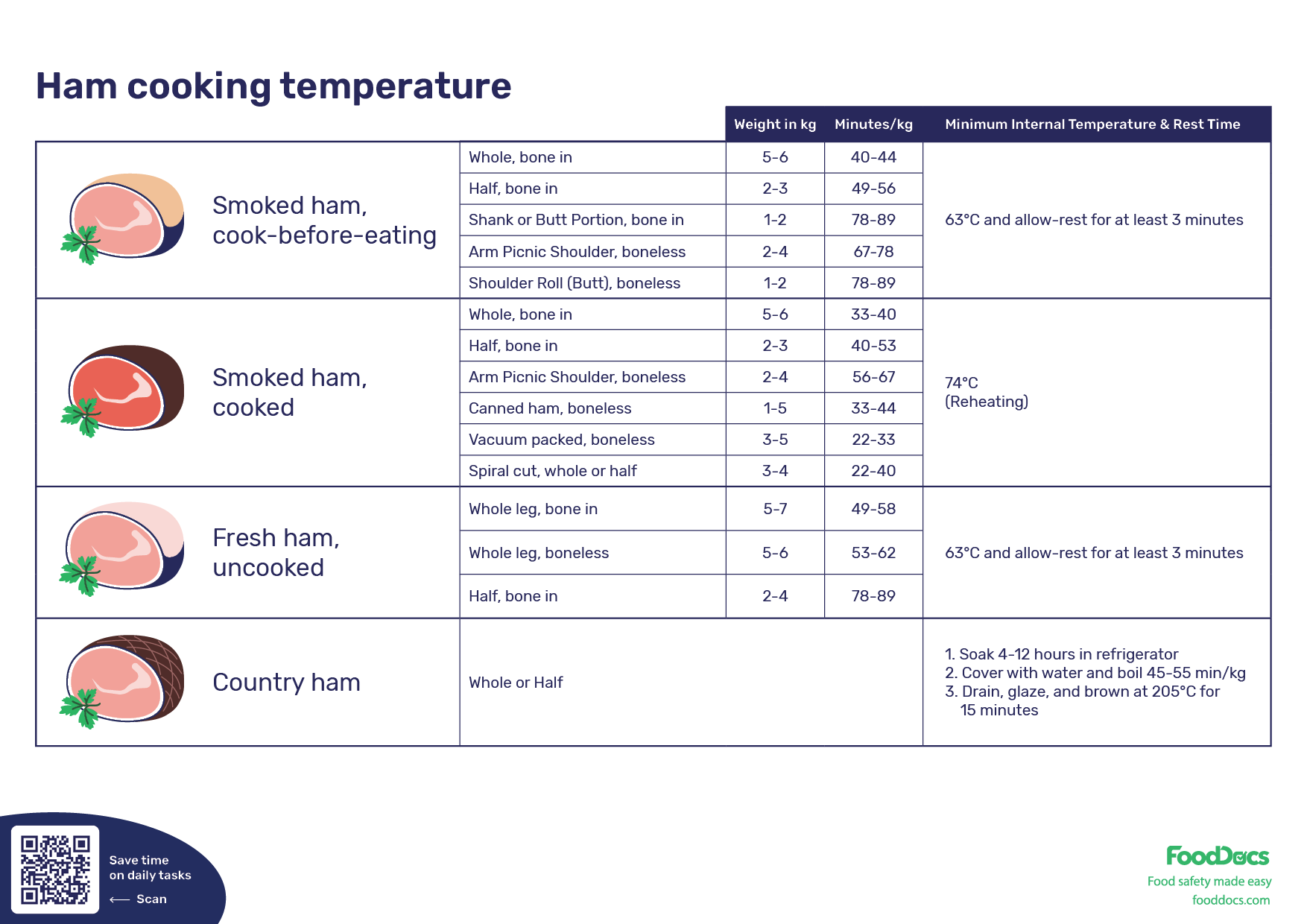
So, what temp do you cook ham at? The short answer: 325°F for the oven, but only until the internal temperature hits 140°F (if it’s a pre-cooked ham). I know, I know, you’ve heard 350°F your whole life. But 325°F is the gentle, patient parent. It lets the fat render without scorching the glaze, and it gives the meat time to stay moist. Your oven runs hotter than it says, anyway. We all live in that sweet, sweet lie.
Let’s get specific, because vague advice is the enemy of a good dinner. You’ve got two main types of ham: the “fully cooked” kind (that’s the most common spiral-cut or city ham) and the “fresh” or “cook-before-eating” ham (which is rare and looks like a giant, tragic pork roast). For a fully cooked ham, 325°F oven, internal temp of 140°F. That’s it. You’re done. Don’t push it to 160°F or you’re back in the Sahara, my friend.
Now, for that rare, raw-to-the-world fresh ham? You’re in for a longer ride. Start at 325°F, but your target internal temperature is 145°F, followed by a three-minute rest. This is a different beast. It’s like a giant pork shoulder, so you need patience. A fresh ham can take 20 to 30 minutes per pound. If you don’t have a probe thermometer with an alarm, go buy one right now. I’ll wait. No, seriously, close this article. Your guests deserve better than guessing.
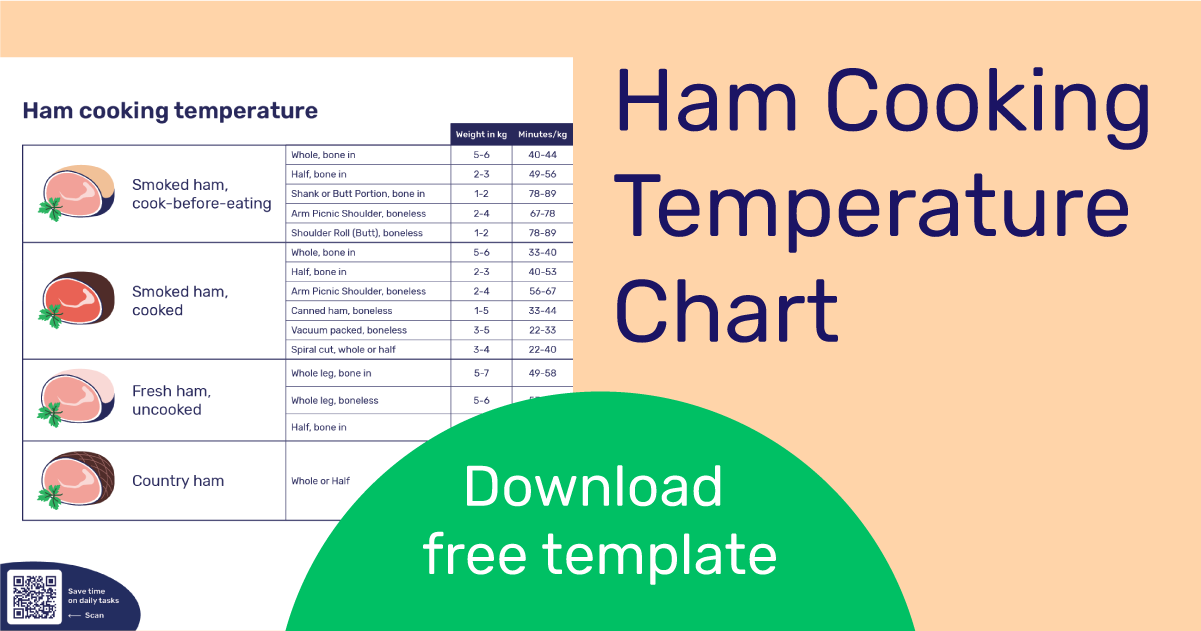 Ham Cooking Temperature Chart | Free Download
Here’s the ironic part: everyone obsesses over the glaze. They paint on honey, brown sugar, pineapple, or bourbon like they’re Michelangelos. But a great glaze is useless if the meat is dry. The glaze is the cherry on top of a cake you’ve already burned. So, focus on the 140°F goal first. Apply your glaze in the last 30 minutes of baking, so it sets without burning. Burnt sugar tastes like regret. I know this because I’ve licked that spoon.
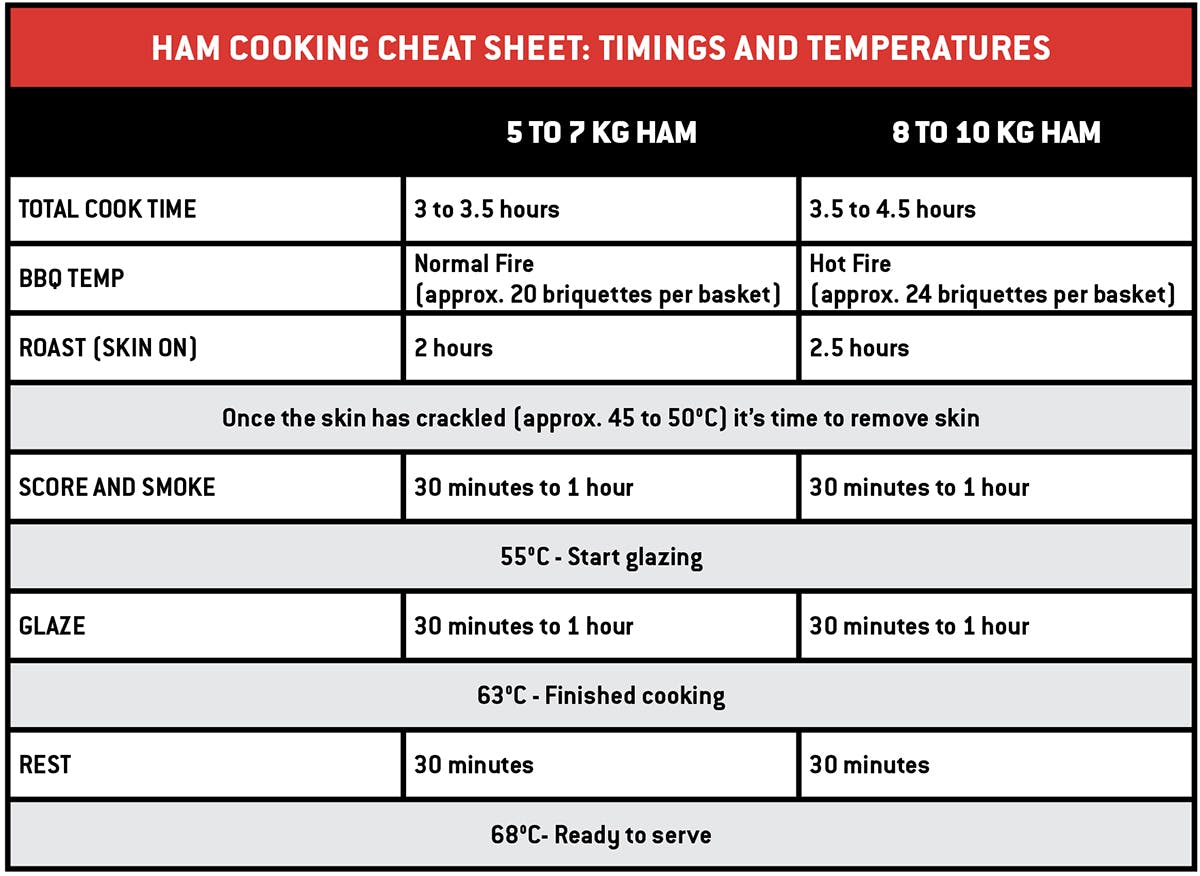
Let’s talk about “carryover cooking” for a second, because it’s the little secret that separates the pros from the amateurs. Once you pull that ham out of the oven, the internal temperature will rise another 5 to 10 degrees. So, if you’re aiming for 140°F, pull it out at 130°F to 135°F. Yes, really. Let it rest, tented loosely in foil, for at least 15 minutes. The juices will redistribute, and the ham will stop sweating in the pan. Your slices will be juicy, not dusty.
One more trap: basting. Don’t. Stop. You open the oven door every 10 minutes to spoon juices over the ham, and all you’re doing is letting the heat escape. You’re extending the cooking time and drying out the meat. The ham is already swimming in its own fat; it doesn’t need more pool time. Just trust the temperature and the closed oven. If you’re bored, slice some apples. We all need hobbies.
 Cooking Times Temperatures Charts Hams Griddle Cooking Temperature
Side note: what if you’re cooking a spiral-cut ham? Those are the fancy pre-sliced ones. They are the most prone to drying out because every cut is a doorway for moisture to escape. For these, you actually want to bake them at a lower temp, like 275°F, and cover them tightly with foil for the first hour. Then glaze and uncover for the last 20 minutes. Keep that internal temp at 140°F. You paid extra for those pretty spirals; don’t turn them into ham jerky.
Finally, the ultimate tip: buy a reliable digital meat thermometer. Not the old analog one that takes a minute to wiggle. A digital instant-read probe. It costs twenty bucks. It will save you from throwing away a $40 ham. Think of it as an insurance policy against embarrassment. I have two, because I am now a reformed sinner who preaches the gospel of temperature.
So, to circle back: the perfect ham isn’t about secret family glazes or fancy carvings. It’s about the moment you slide the probe in and see that little number 140 (or 145 for fresh). That’s the magic number. That’s the difference between a ham that makes your grandmother proud and a ham that gets quietly pushed to the side of the plate. Now go forth, set your oven to 325°F, and don’t be a hero. I believe in you. And your ham believes in you, too. It just wants to be warm, not rebuilt.

