
Let’s start with the easy wins. Cakes and muffins? Go for it. Greek yogurt brings moisture without making things greasy. It’s a dream in banana bread, too. I’ve done it a hundred times, and nobody has ever called the cops on me for bad baking.
Pancakes and waffles are another slam dunk. Swap it one-for-one. You’ll get a fluffier texture and a slight tang that makes everything taste more interesting. It’s like sour cream’s younger, slightly healthier sibling showing up to the party.
Cheesecake? Ooh, this is a controversial one. You can use Greek yogurt, but it won't be as rich. It’ll be lighter, almost mousse-like. Some people love that. Others will throw their spatula at the wall. Know your crowd.
The Tricky Part: Fat and Tang
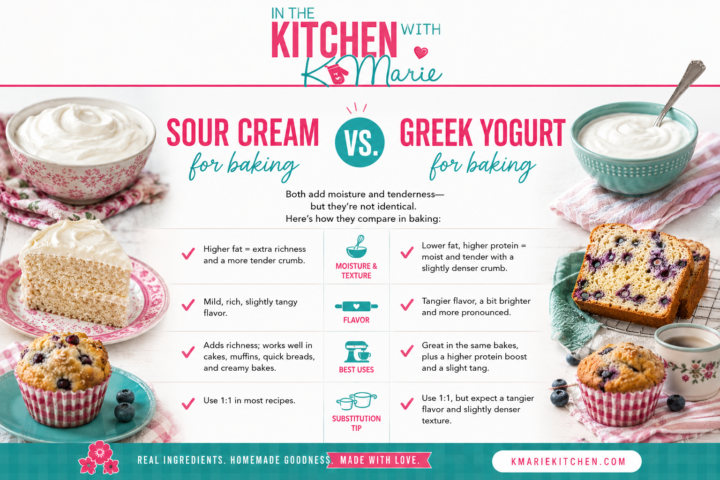
Here’s where I need you to pay attention. Sour cream is typically around 18-20% fat. Greek yogurt is usually 0-10% fat. That fat matters. It keeps baked goods tender and prevents them from drying out. If you use nonfat Greek yogurt, you’re asking for trouble.
So always use full-fat Greek yogurt. The 5% or 10% kind. Not the diet stuff. We’re baking, not dieting. There’s a time and place for kale salad, and it’s not inside a chocolate cake.
 Sour Cream vs Greek Yogurt for Baking: Which One Is Better? - KMarie
The other issue is the tang. Greek yogurt is often tangier than sour cream. In a savory biscuit or a coffee cake, that tang is a feature. In a delicate vanilla cupcake, it might scream a little too loud. If you’re sensitive to tang, add a pinch of sugar to balance it out.
What about texture? Greek yogurt is thicker. Like, “stick-a-spoon-upright” thick. If your recipe calls for a really wet batter, you might need to thin it out. Add a splash of milk or water to your yogurt until it looks like sour cream. Easy peasy.

