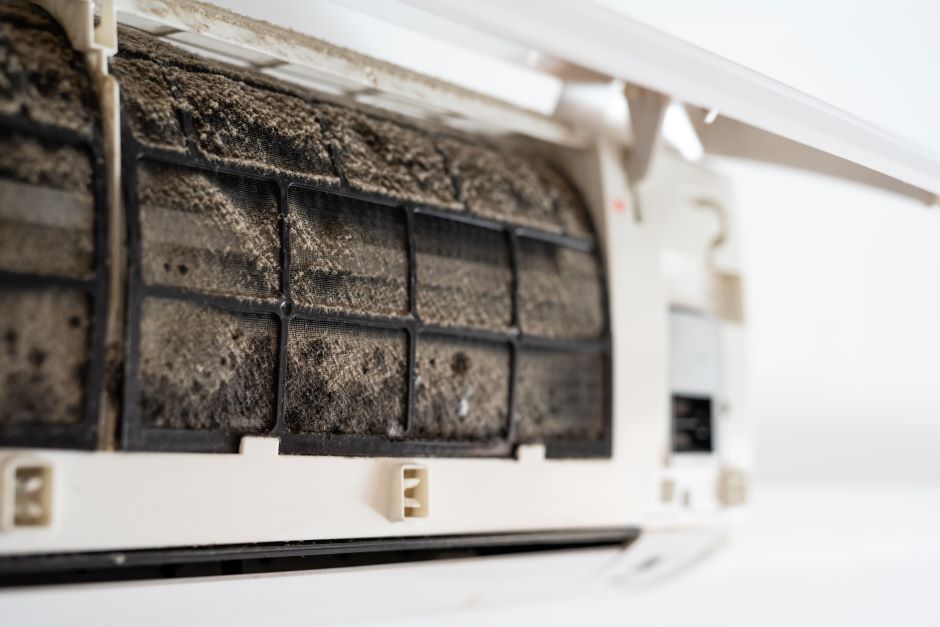
Mold in your air conditioner is basically a squatter that pays no rent. It loves the dark, damp, and cool environment inside your unit—like a goth teenager’s bedroom, but less eyeliner and more respiratory hazards. Surprisingly, over 80% of window AC units sampled in homes contain some level of mold within the first year of use. That’s right: your cooling savior is secretly a fungal Airbnb hosting thousands of invisible guests.
The worst part? The mold doesn’t just stay in the unit. Every time you hit “on,” it launches tiny spores into your room like a confetti cannon made of microscopic lung-destroyers. You might think that fresh, cold air is a blessing, but your nose knows. If you smell a musty, old-library-scented breeze, your AC is basically coughing on you.
Why You Should Never Ignore the “Dirty Sock” Smell
Let’s get real: that funky odor is your AC’s way of saying, “Hey, I’m rotting from the inside.” Mold doesn’t just smell bad—it can cause sneezing, itchy eyes, and a general “I feel like a damp sock” malaise. In rare but terrifying cases, certain molds produce mycotoxins, which are essentially chemical weapons brewed by fungi. One study found that window AC units can harbor Stachybotrys chartarum—the infamous “black mold”—which is the horror movie villain of the fungi kingdom.
But let’s not panic. You are not doomed to become a mold-based conspiracy theory victim. The real joke is that most mold blooms happen because of one simple sin: you forgot to drain the water. Window ACs collect condensation, and if that water sits for more than 48 hours, mold throws a pool party. Imagine your AC unit as a tiny, humid Florida swamp, and you’ll get the picture.