That sound is deeply baked into human history. For thousands of years, the crackle of a fire meant safety, warmth, and community. Ancient humans gathered around it for storytelling, and that rhythmic pop helped keep wild animals—and our own anxiety—at bay.
Today, the crackle is a cultural anchor. Think of a camping trip with friends, the fireplace in a holiday movie, or even a virtual fireplace video on YouTube. We actively seek out that sound because it triggers a primal sense of comfort and relaxation.
In Japan, there’s a tradition called irori, where a sunken hearth is the center of the home. The crackling of the fire creates a natural ba—a shared space of presence. It’s a reminder that this noise isn’t just background; it’s a conversation starter.
Fun Facts to Share at Your Next Fire
Here’s a good one: the loudest crackles come from “wet” wood, but that’s actually bad for your chimney. The steam carries creosote, a flammable tar that builds up in your flue. So a super-crackly fire might be cleaning your ears but dirtying your safety.
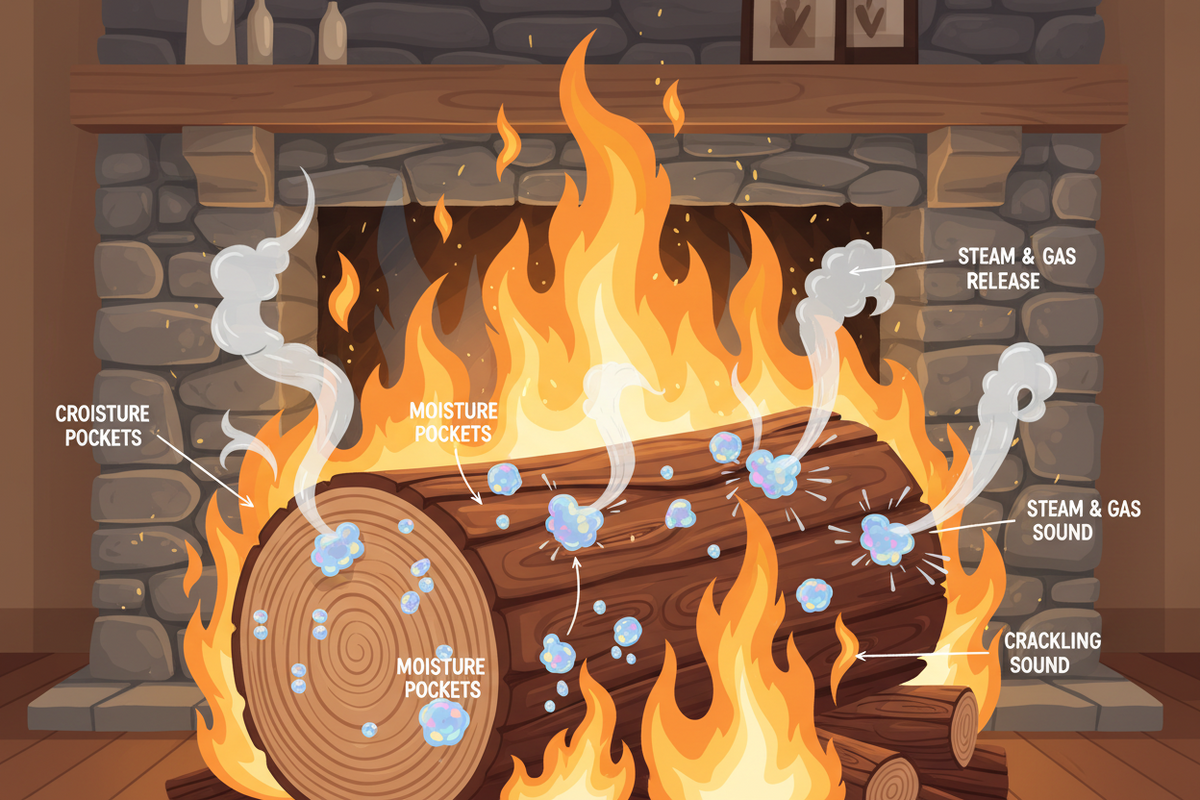 Why Does Firewood Crackle? The Science Behind Fire Sounds
Another fact: some woods, like black locust, burn so hot and clean that they rarely crackle at all. They’re the silent, efficient workhorses of the woodpile. And then there’s eucalyptus—often called “the crackling king” because it pops and spits with almost musical frequency.
Finally, the crackle is actually a sign of energy leaving the wood. Every pop is a pocket of potential heat escaping as sound instead of steady warmth. It’s nature’s way of adding a little drama to your evening.