
Honestly, if you taste a single grain of each side by side, they’re both salty. But because iodized salt crystals are smaller and denser, they dissolve faster on your tongue. That can make iodized salt taste a tiny bit “sharper” or more metallic to some people. Kosher salt dissolves more slowly, giving you a softer, more gradual saltiness. Most home cooks won’t notice the difference in a soup, but sprinkle them on a tomato slice, and you’ll feel it.
A story from my kitchen (the day I ruined the chicken)
One time, I was making a roast chicken and blindly grabbed the iodized salt instead of my usual kosher. I did my normal “pinch and sprinkle” move, but because the crystals are so small, I ended up with twice as much salt on the skin. The skin tasted like a salt lick. My husband politely asked, “Is this a new recipe?” It wasn’t. That’s when I learned that measuring matters—a teaspoon of kosher salt is actually about half as salty as a teaspoon of iodized salt because the flakes take up more space.
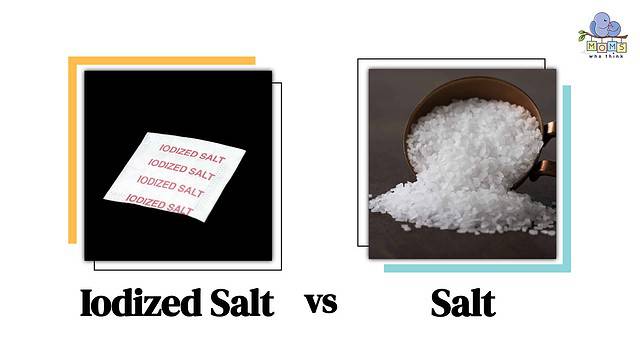 Kosher vs. Iodized Salt: Two Unique Differences & Which is Healthier

