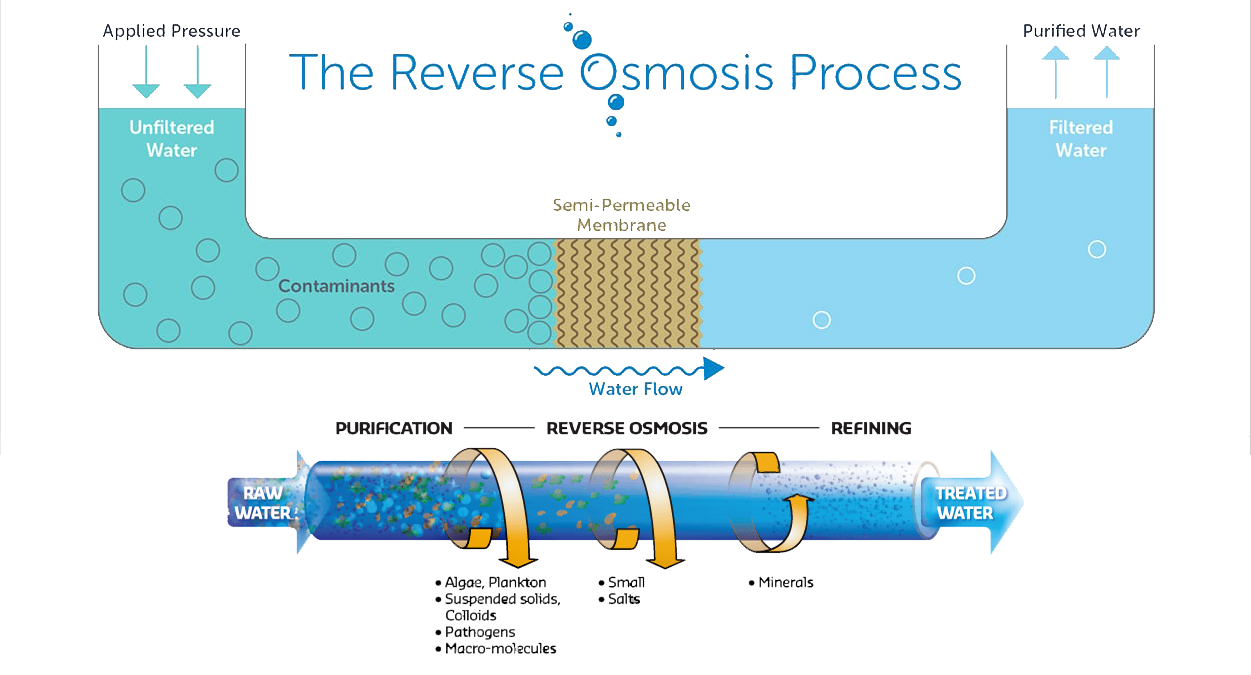
Think of reverse osmosis as a very picky cocktail strainer. You pour in your messy tap water—full of chlorine, sediment, and yesterday’s coffee grounds (okay, not coffee grounds, but you get the idea).
The RO system forces that water through a semi-permeable membrane. It’s like a microscopic colander with holes so tiny that only H2O molecules can slip through. Everything else—the hard stuff, the weird stuff—gets flushed away.
Ever tried to squeeze a water balloon through a keyhole? That’s what your water feels like. But it works, and the water that comes out is ridiculously pure.
The Membrane: The Real MVP
This membrane is the heart of the system. It’s basically a plastic sheet with pores 0.0001 microns wide. To put that in perspective: a human hair is about 70 microns. So we’re talking 70,000 times smaller than a hair.
If a virus tried to sneak through, it’d be like you trying to squeeze through a cat flap while wearing a sumo wrestler suit. Not happening. The membrane says, “Nope, back to the drain with you.”

