
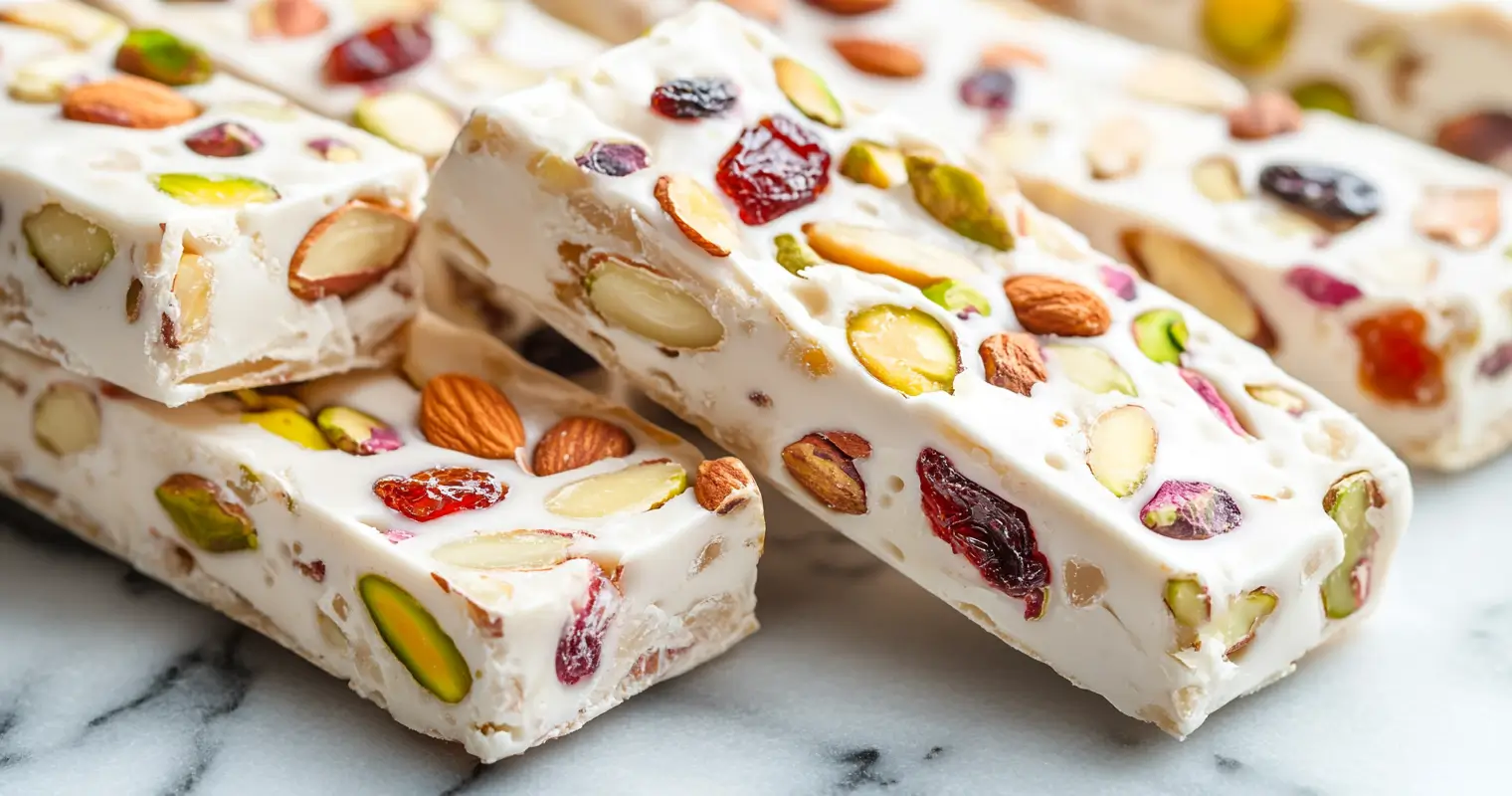
At its core, nougat is a simple alchemy of sugar, honey, and egg whites—whipped into a frenzy until it becomes fluffy and light. The magic happens when you add nuts, most commonly almonds or pistachios. What you get is a texture that sits somewhere between a soft marshmallow and a sturdy taffy.
There are two main globes of nougat influence: the white version and the brown version. The white nougat, or nougat de Montelimar, is the French classic, packed with almonds and pistachios, and often drizzled with honey. The brown nougat is the torrone you find in Italy or Spain, cooked longer with caramelized sugar and sometimes studded with chocolate.
Here’s a fun fact: the word “nougat” comes from the Latin nucatus, meaning “nutty.” So, if someone calls you a little nutty, you can actually take it as a culinary compliment. History suggests it was a medieval invention, possibly a clever way to preserve honey and nuts for the winter.
The Global Nougat Tour
You can travel the world through nougat without leaving your kitchen. In France, Montelimar produces a protected, almost sacred version that’s served alongside coffee and liqueurs. In Italy, torrone is a Christmas staple, so hard you might need a hammer, or so soft it melts in your hand.
Head to Spain for turrón, a Jijona-style nougat that’s creamy and almost nut-butter-like, often pressed into a brick. In the United States, nougat is the sticky, white filling in a Snickers or a Milky Way—though mass-market versions rarely use honey or real nuts. The contrast is night and day.
Pro tip: if you want to impress your friends, avoid the generic supermarket kind. Seek out artisan nougat from a local Italian deli or a French confectionery. The texture will be softer, the honey will sing, and the nuts won’t be an afterthought.
 How to Make Nougat: Easy Step-by-Step Guide

