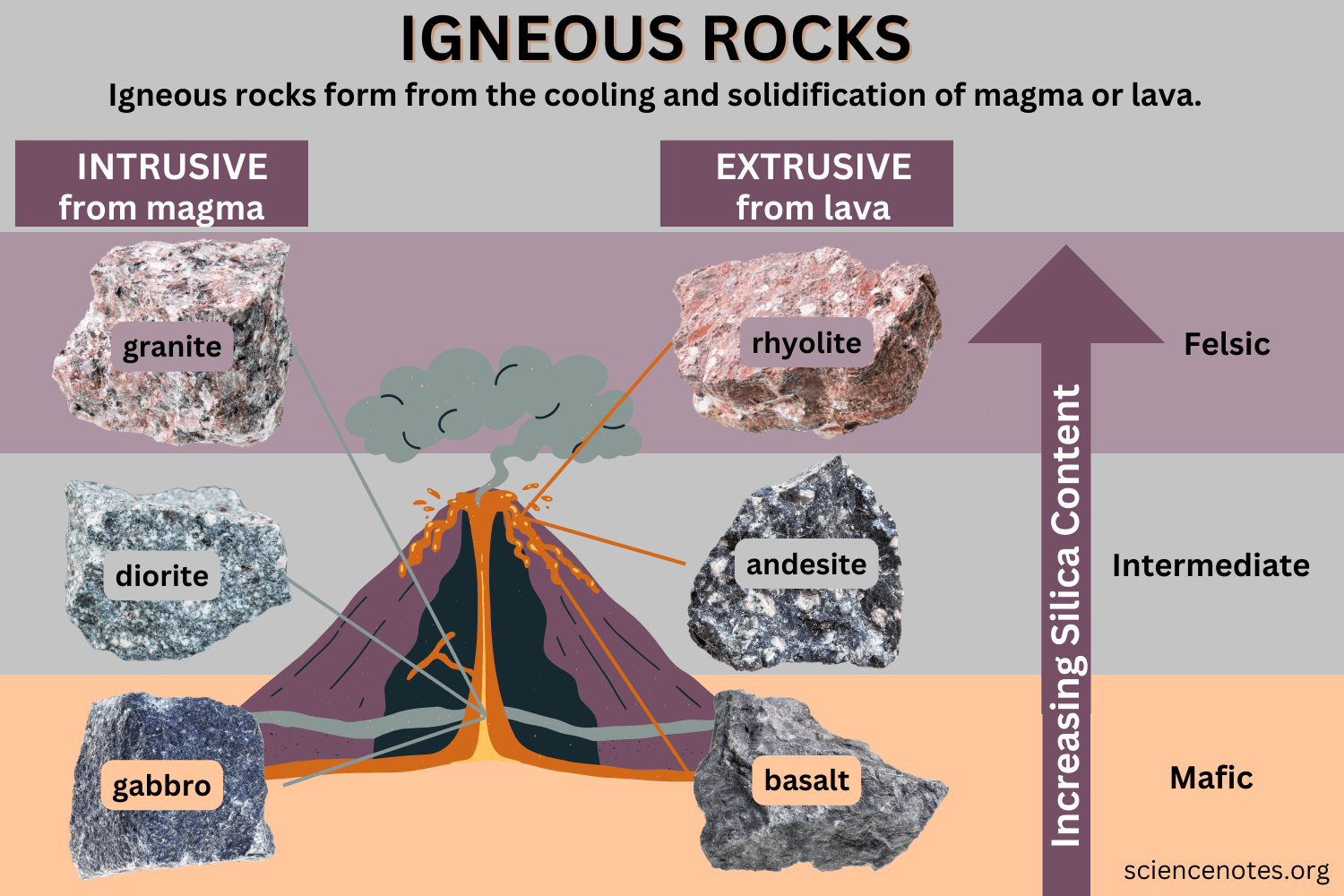
Igneous rocks are everywhere. The Continental crust you live on? Mostly granite. The ocean floor? Basalt. Your kitchen counter might be polished granite. That’s a cooled magma chamber from 300 million years ago.
You eat igneous rocks, too. Potassium feldspar weathers into clay, which grows vegetables. Volcanic ash (from rhyolite eruptions) creates some of the richest soil on Earth. Italy’s vineyards? Thank an ancient volcano.
Even diamonds are igneous. They form under extreme heat and pressure in magma pipes called kimberlites. A diamond is literally a lump of carbon cooked in the Earth’s belly. You pay thousands for that.
The Quirky Bottom Line
So, igneous rocks are made of: silica, oxygen, and a handful of elements that arrange into feldspar, quartz, olivine, and more. It’s a hot, slow, sometimes explosive recipe.
Next time you see a black basalt boulder or a sparkly granite countertop, remember: that rock started as a soupy, glowing mess inside the planet. It cooled, crystallized, and waited billions of years just to meet you.
Pretty cool, right? Rocks are just frozen lava with a really, really long attention span.

