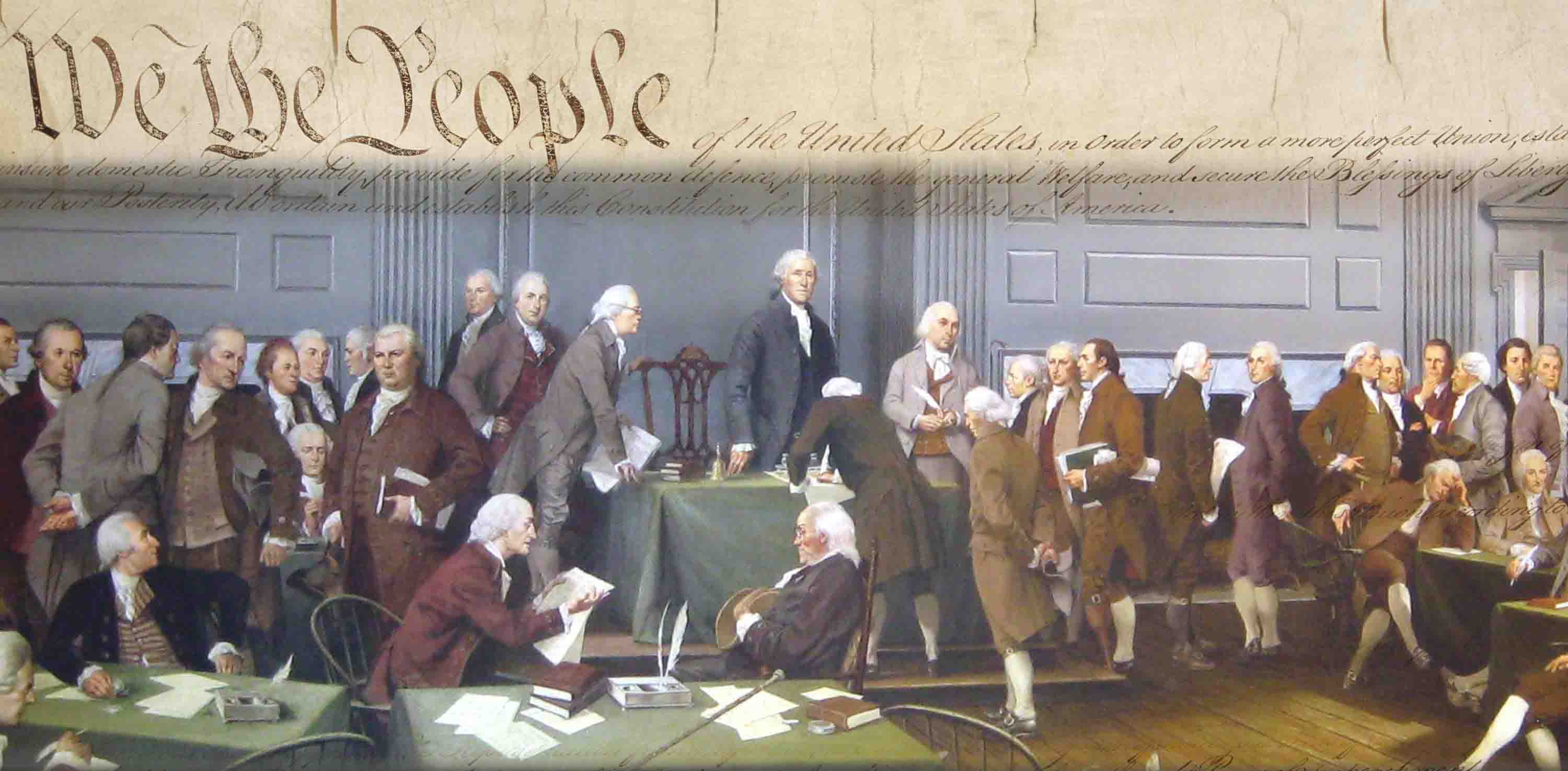
On September 17, 1787, only 38 of the 55 delegates actually signed. Three refused, saying, “Nope, too much federal power.” One of them was George Mason, who complained there was no Bill of Rights. Spoiler: we added one in 1791, but only because people threatened to rebel again. Benjamin Franklin, old and frail, had to be carried in on a sedan chair. He looked at the half-sun carving on George Washington’s chair and said, “I have the happiness to know it is a rising sun.”
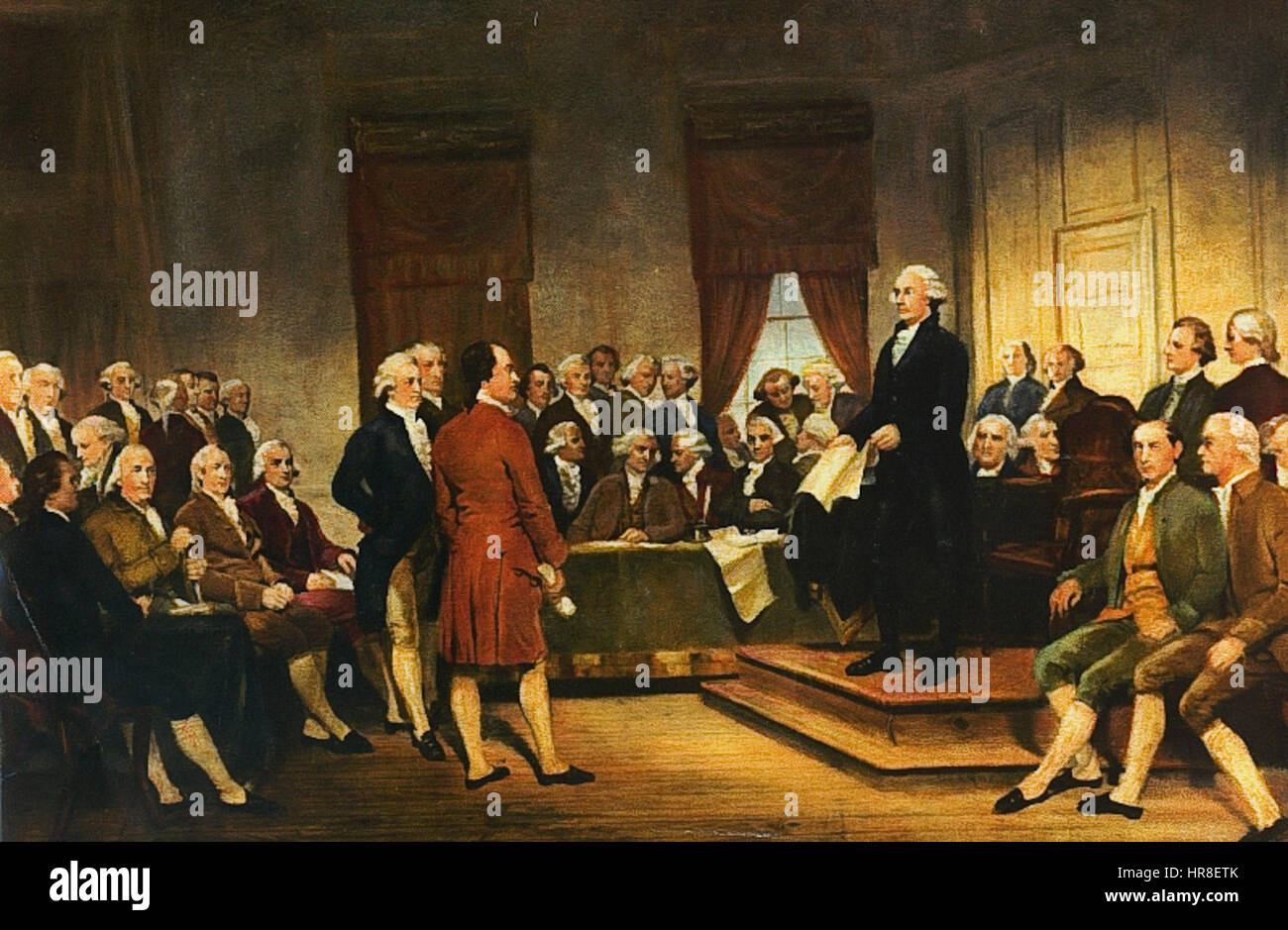 George Washington Constitutional Convention
But let’s be honest: it was a miracle it passed at all. Rhode Island didn’t even send delegates—they called it “the proceeds of intrigue.” They got it right. The Convention had violated its own mandate, scrapped the Articles, and created a government no one had agreed to. It was, in modern terms, a coup by committee.
What It All Means Today
So why care about 1787? Because every time you hear a politician yell “original intent!”—remember the original intent was to make sure rich white guys kept the peace among themselves. The Constitution was a pragmatic, messy, human document, not a sacred tablet. Madison himself called it a “recipe for discord.”
And yet—it’s also the framework that let us abolish slavery, give women the vote, and argue our way into a better union. That’s the irony: the system designed to slow change became the tool for making change. We’re still fighting those 1787 fights: state vs. federal power, representation vs. equality, and whether a small number of people can ignore the majority. So next time you groan about gridlock, remember: it’s not a bug—it’s the feature those 55 sweaty guys built. And we’re still stuck with their air conditioning.

