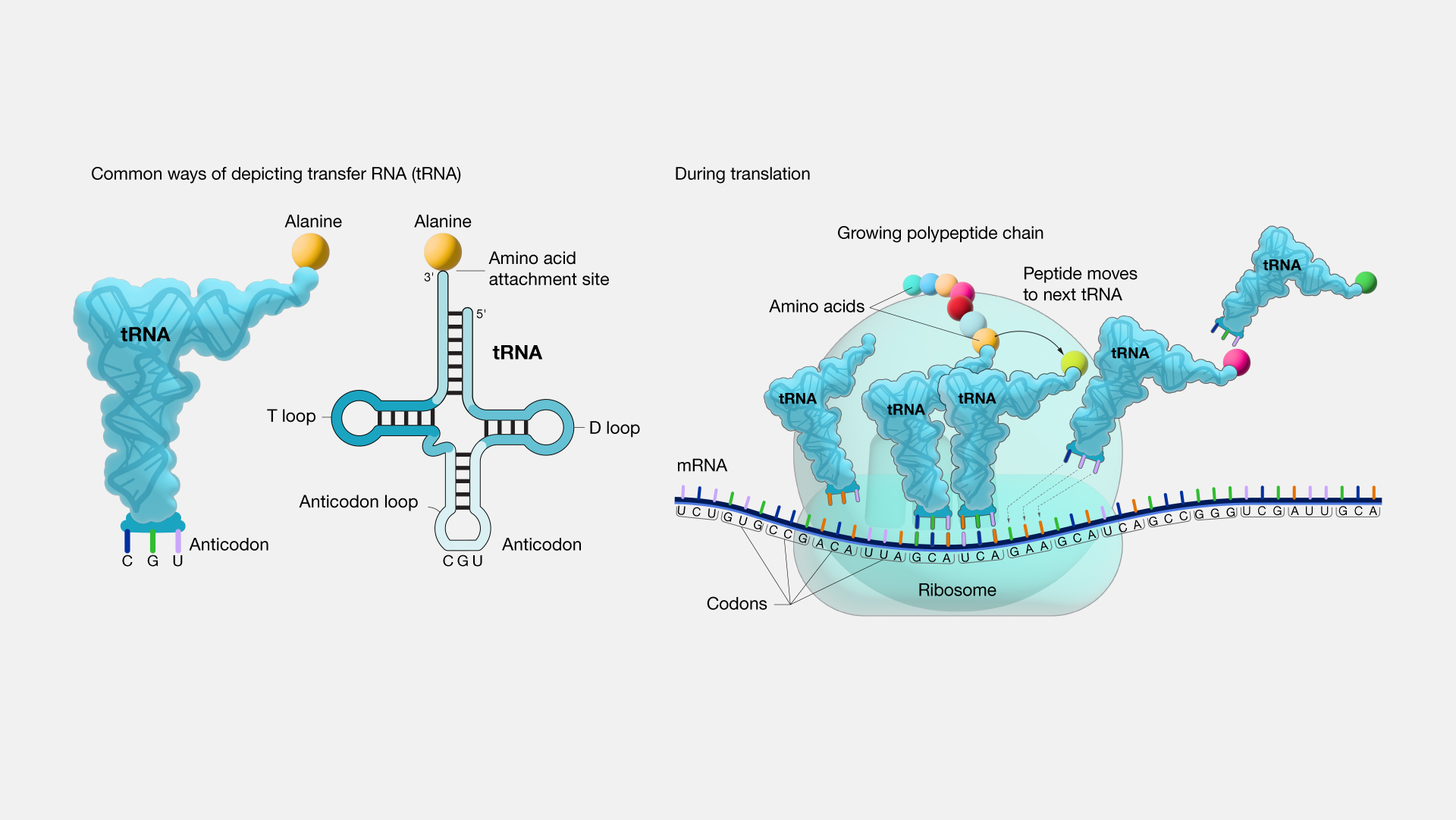
If DNA is the architect and mRNA is the messenger who photocopies the plans and runs to the construction site, tRNA is the actual courier, hauling the raw materials. It ferries amino acids—the building blocks of proteins—to a cellular machine called the ribosome. Think of it as the vegan meal-prep delivery for your cells, but way, way faster.
Each tRNA molecule has a specific “address tag” called an anticodon. This tag matches perfectly with a code on the mRNA strand. It’s like a molecular key fitting into a lock, except this key is carrying a tasty amino acid payload.
Without tRNA, your body couldn’t make a single muscle fiber, a hair strand, or even the enzyme that lets you digest your morning avocado toast. You are, quite literally, built by these tiny, hyper-efficient taxis.
The Reading, Wobbling, and Parkour of Protein Synthesis
The process is surprisingly elegant. Imagine a nightclub where the mRNA is the glowing dance floor, and the ribosome is the DJ. The DJ reads the mRNA code three letters at a time—these are called codons. Enter tRNA, gracefully gliding in with the exact amino acid the DJ just called for.
Here’s a fun fact: there are only about 20 common amino acids, but there are over 30 types of tRNA. Why? Because of something called the “wobble hypothesis.” Basically, the third letter in the genetic code can be a little flexible. It’s like allowing a key to work even if it’s slightly bent—cellular efficiency at its finest.
Once the tRNA delivers its cargo, another tRNA takes its place. They form a peptide bond, linking amino acids in a chain. This chain folds into a protein, and the now-empty tRNA is recycled, ready for its next delivery run. Fast, cheap, and out of control—in the best possible way.

