
Travel the globe with your bag of flour. In France, flours are labeled by ash content (Type 45, Type 55), which loosely correlates to protein percentage. French bakers obsess over it for croissants. Head to Japan, and you’ll find super-low protein flour (around 8%) for those pillowy, tear-apart milk breads.
In the American South, White Lily flour is legendary for biscuits thanks to its soft wheat from the Ohio River Valley, hitting about 9% protein. That’s why biscuits down there are fluffier than a Nashville cloud. It’s a regional identity baked into a number.
Whole wheat flour contains the entire grain, making its protein percentage less straightforward—it’s often around 13-14%, but the bran physically cuts gluten strands. So don’t expect a whole-wheat loaf to rise as high as a white one. It’s a party, but the bran is a wallflower.
Practical Tips for the Real Kitchen
Tip one: Stop buying one bag of flour for everything. Keep a bag of bread flour (12-13%) for yeasted doughs, and a bag of pastry or cake flour (8-9%) for scones and soft cookies. Your pancakes will thank you.
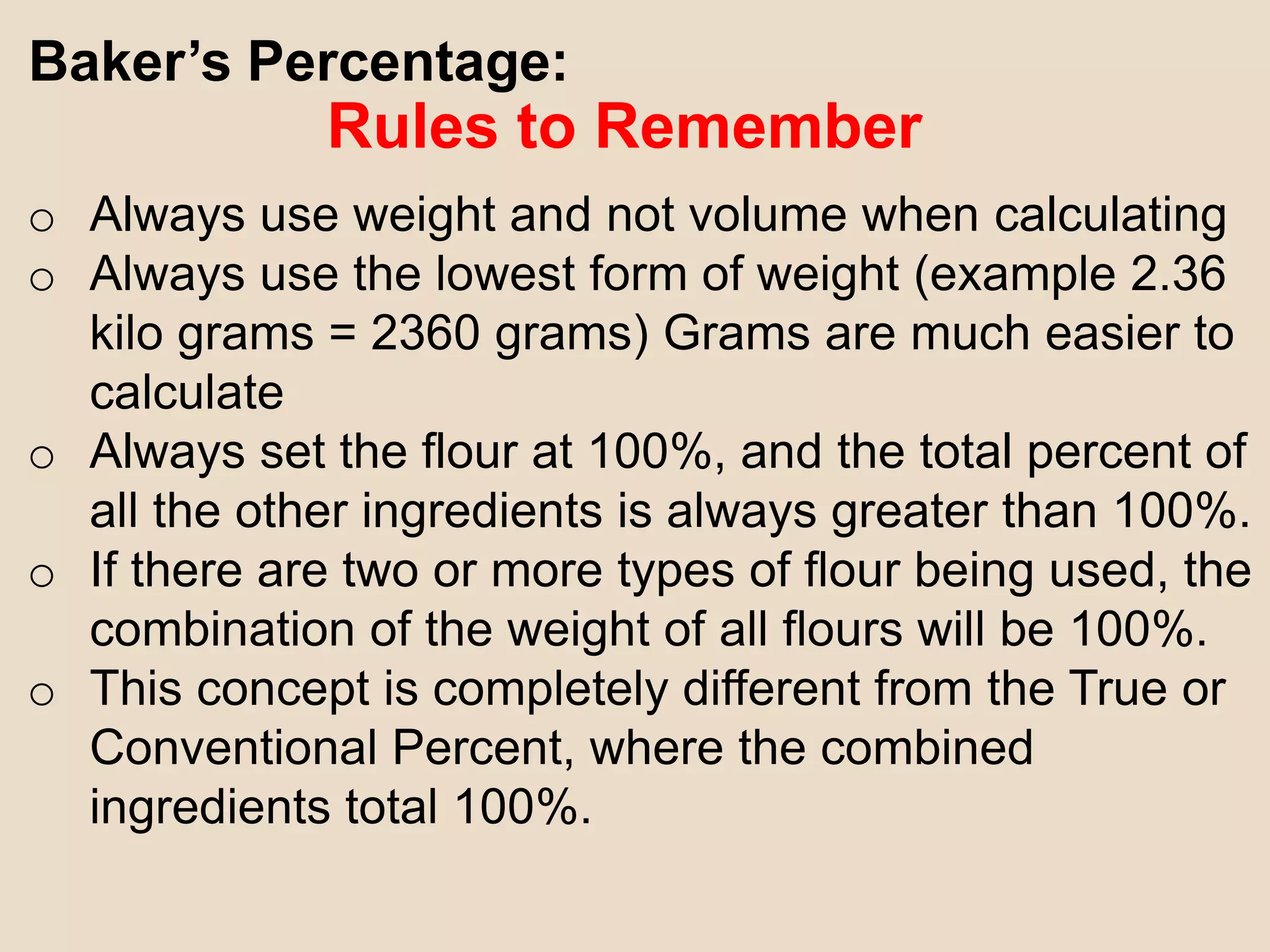 Bakers Percentage.pptx
Tip two: If a recipe calls for cake flour and you only have all-purpose, do this: remove two tablespoons of flour from each cup, and replace with two tablespoons of cornstarch. You’ve just dropped the protein percentage by about 2%. Instant hack.
Tip three: For chewy cookies like Levain Bakery style, use bread flour. For thin, crispy cookies, stick to all-purpose. The protein ratio directly controls spread. Science for the sweet tooth.
Don’t forget to weigh your flour. Scooping from a bag can vary protein absorption by 20%. A kitchen scale is your new best friend for consistency. Trust the scale, not your eyes.

