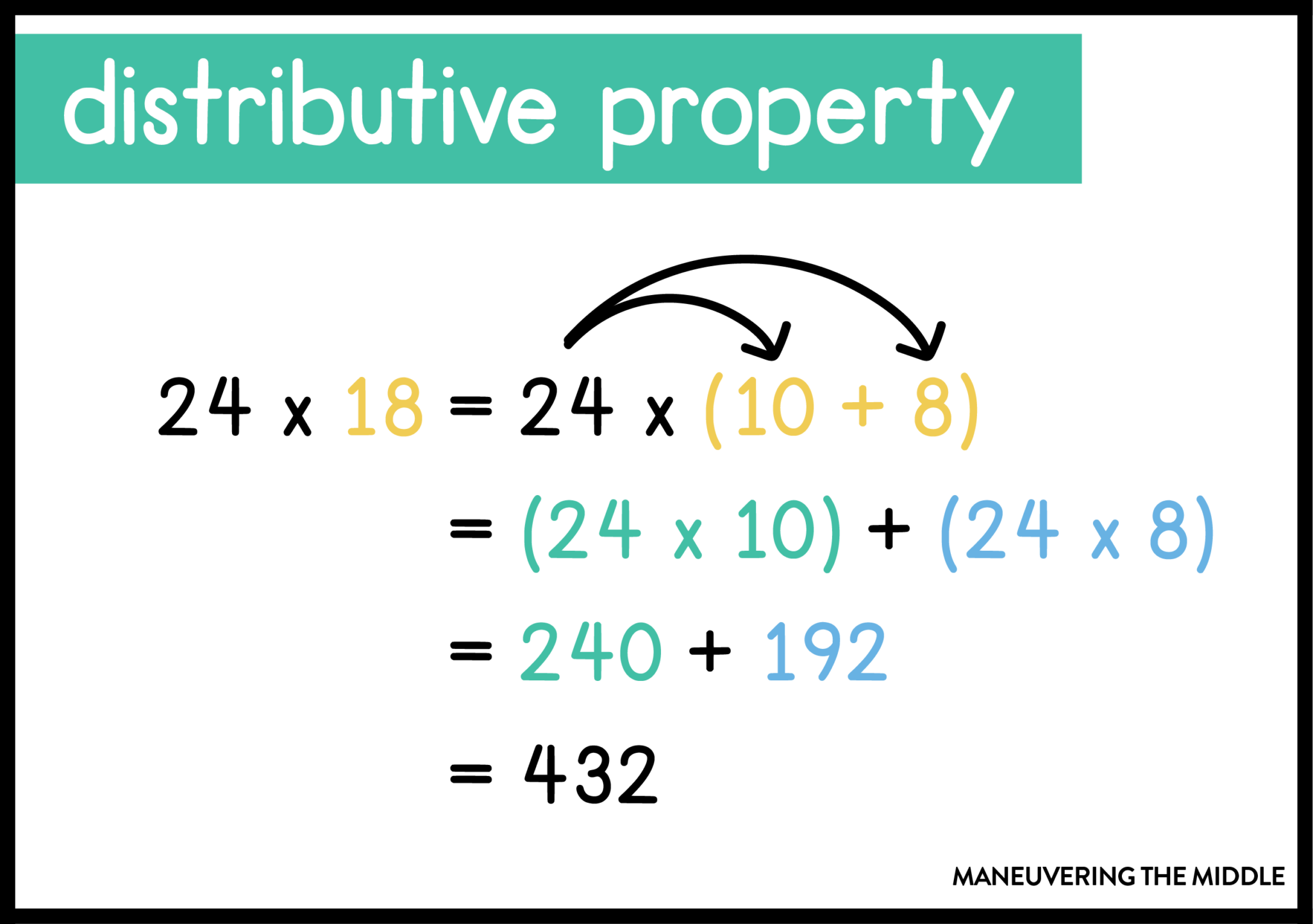
The Distributive Property says: a × (b + c) = (a × b) + (a × c). That’s it! It’s like having a pizza and sharing it with two friends—you give a slice to each.
In plain English: you distribute the number outside the parentheses to each number inside. Then you add the results. Easy peasy, lemon squeezy.
No magic spells required—just a little patience and a sense of humor. (And maybe a snack, because math always goes better with snacks.)
Let’s Try It with a Real-Life Problem
Imagine you’re buying 5 bags of candy. Each bag has 3 lollipops and 4 gummy bears. How many treats do you have total?
You could multiply 5 × 7 (because 3 + 4 = 7). That gives you 35. But the Distributive Property gives you another path: 5 × (3 + 4) = (5 × 3) + (5 × 4).
So that’s 15 lollipops plus 20 gummy bears = 35. Same answer, but now you’ve got the satisfaction of splitting the work. High-five yourself.
See? No meltdowns, no tears. Just a happy math moment.
Why Bother? (Besides Showing Off at Parties)
Here’s the secret: the Distributive Property makes mental math a breeze. Let’s say you need to multiply 6 × 24. Yuck, right?
But 24 is just 20 + 4. So rewrite it: 6 × (20 + 4) = (6 × 20) + (6 × 4). That’s 120 + 24 = 144. Told you—superpower.
Now you can multiply big numbers in your head while your friends fumble for calculators. You’ll look like a genius. You’re welcome.
And if you mess up? Just blame it on “distributing too many slices.” I do it all the time.
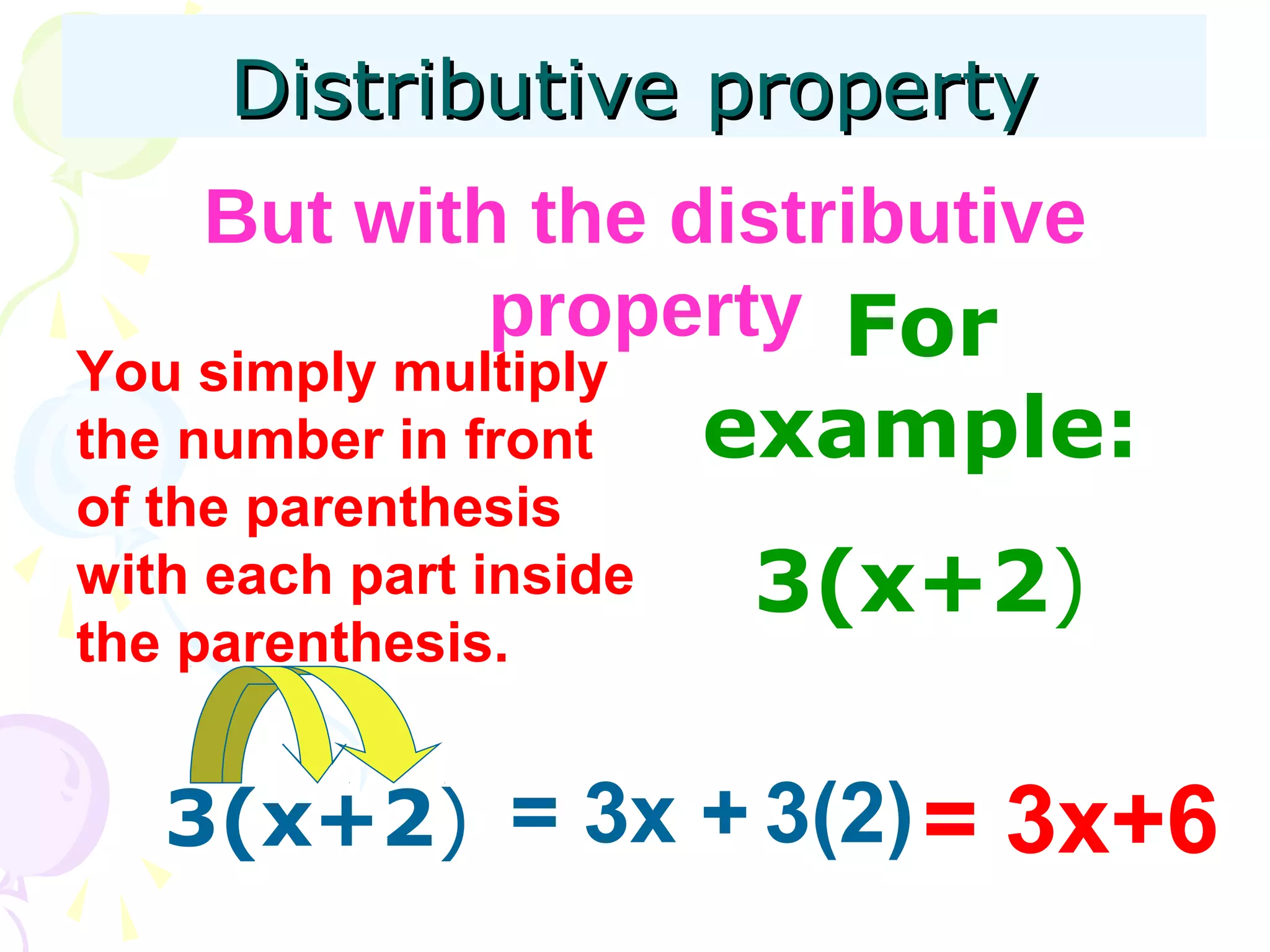 Distributive property in algebra power point | PPT

