
Place the pot somewhere cool but bright—an unheated windowsill or a garage works great. Your seedling will emerge in a few weeks, looking like a tiny, alien shoot with a miniature acorn still clinging to its top. That’s normal. It’s using the acorn’s stored energy like a built-in lunchbox.
Once you see the first pair of true leaves (not the initial cotyledons), move it to full sun gradually. If you shock it with direct sun too fast, the leaves will scorch. (I’ve done that, too—they look like tiny, crispy flags of surrender.)
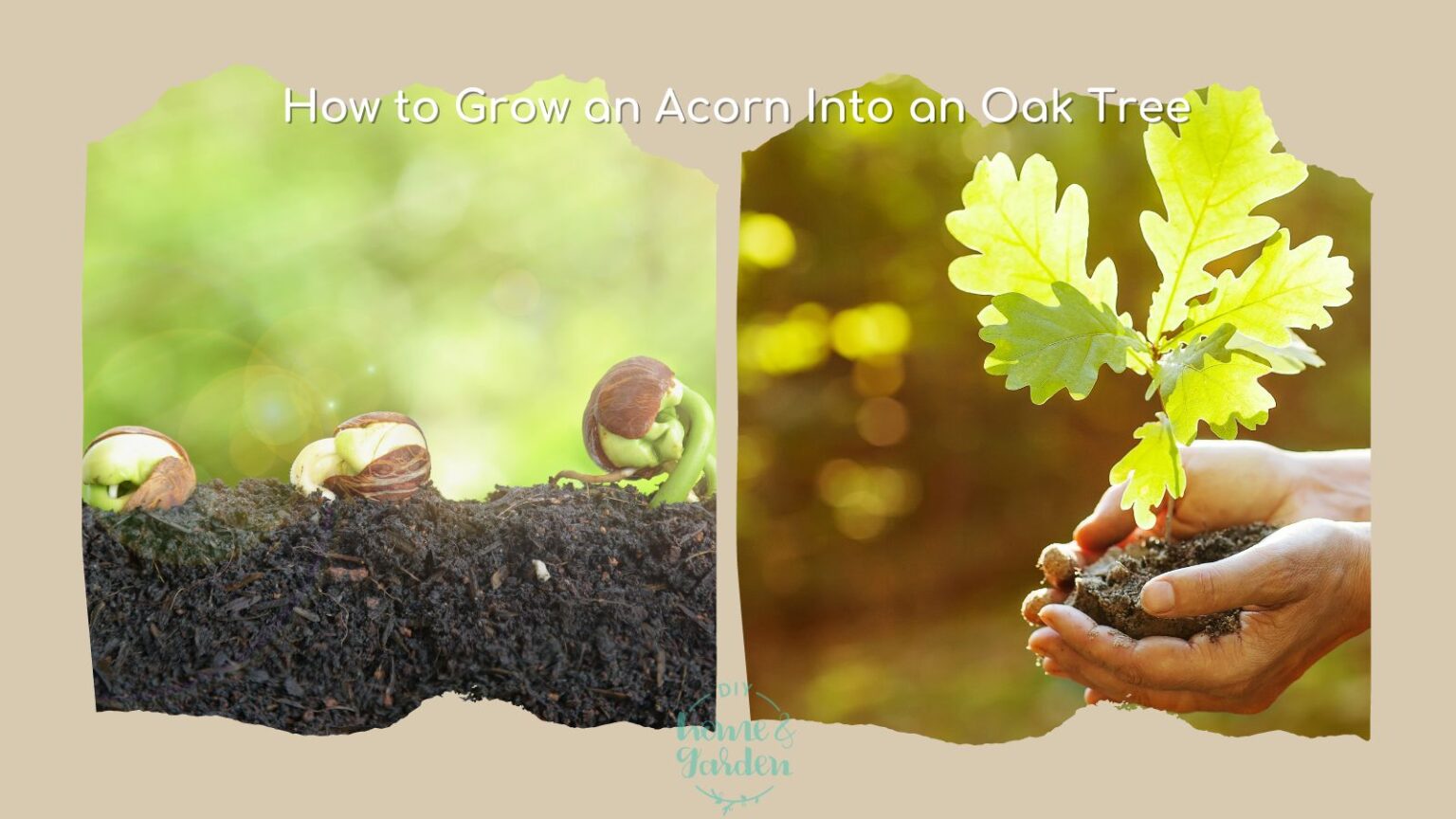 How to Plant an Acorn to Grow an Oak Tree (4 Easy Steps)
The “Real Life” Lesson (Or, Why Bother?)
Here’s the irony: You can do everything right—the float test, the stratification, the careful watering—and still lose a few acorns. That’s ok. Oaks evolved to make thousands of acorns per season because the odds are stacked against every single one. You’re just giving one a better chance.
In a decade, your tree might be 20 feet tall. In a century, it could be a landmark. And in a weird way, you’ll have planted a piece of the future—a silent, patient rebel against a world that sometimes forgets to slow down. (Plus, you get to say, “I grew that from a nut,” which is a truly underrated flex.)
One Final, Bittersweet Note
The best time to plant an oak, as they say, was 20 years ago. The second-best time is today. So grab an acorn, stick it in a fridge, and brace yourself for a relationship that will outlast your phone, your car, and maybe even you. It’s worth it.
And if your first acorn dies? Try again. Nature doesn’t judge—it just keeps dropping nuts.