
This is the whole ballgame. The grain is the lines of muscle fiber running through the meat. On a pork roast, especially a loin or a shoulder, those lines are like tiny threads. Your job is to find them and then cut across them.
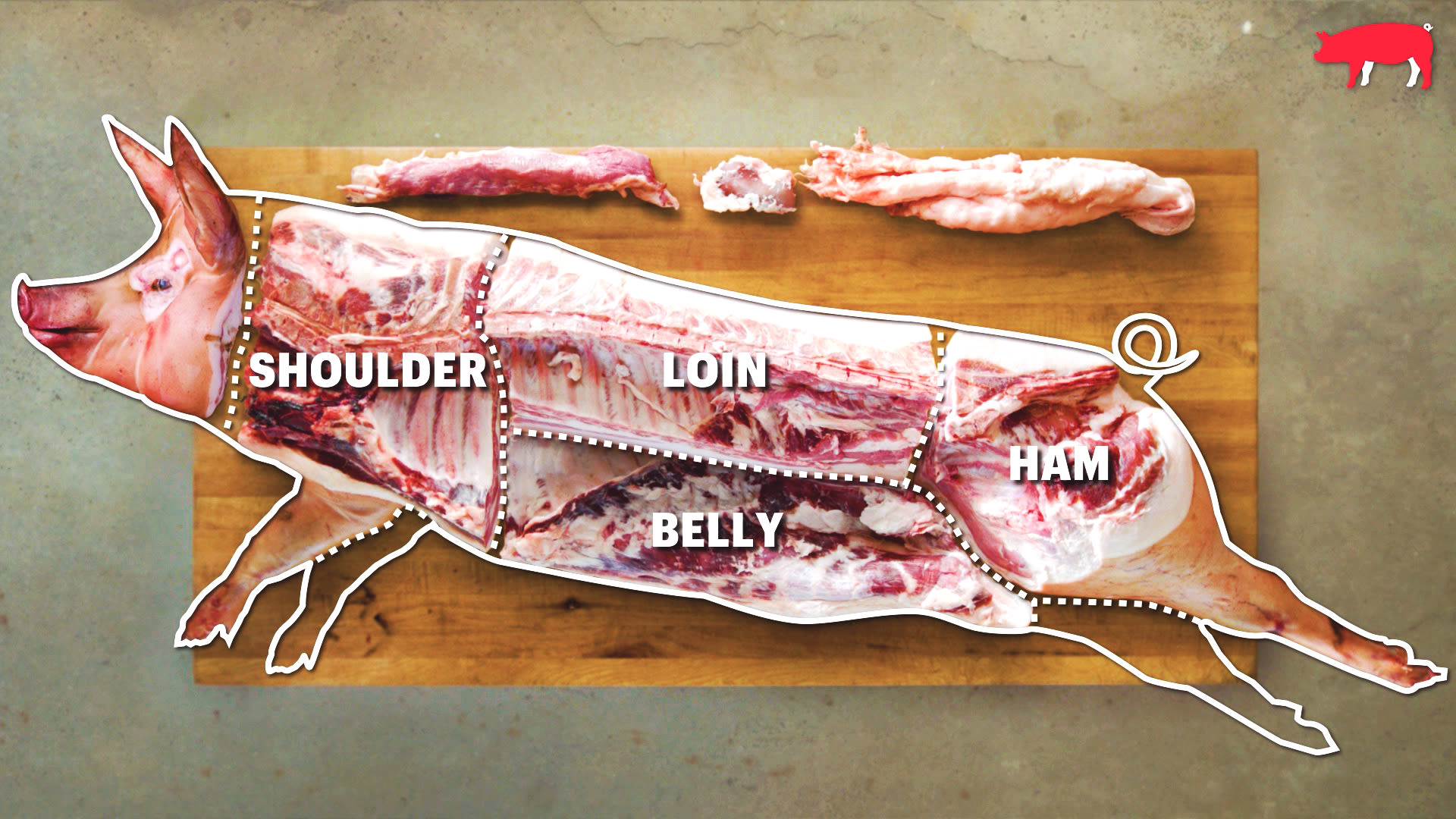 Watch How to Butcher an Entire Pig - Every Cut of Pork Explained
Think of it like a deck of cards. If you cut with the grain (parallel to the lines), you get long, stringy pieces that are tough to chew. But if you cut against the grain (perpendicular to the lines), you’re literally shortening those muscle fibers. That translates to a tender, easy-to-bite slice every single time. It’s the difference between a mouthful of rope and a mouthful of butter.
How to Spot the Grain Like a Pro
Look at the cooked surface of your roast. You’ll see faint lines or ridges running in one direction. That’s your grain. If it’s a boneless roast, you can sometimes feel it with your fingers—it’s a subtle texture. If you’re still lost, imagine your roast is a stray cat, and its hair is all laying in one direction. Cut across that fur.
For a pork loin (the lean, elegant cut), the grain usually runs lengthwise, so you’ll cut short slices across it. For a pork shoulder (the big, brawny cut), the grain can be a messy, tangled maze. Just pick a starting point and aim to cut across whatever lines you see. Consistency isn’t perfection; it’s kindness to your jaw.

