
Here’s the easiest fix in the history of fixes: swap plastic bottles for a reusable glass or stainless steel bottle. Seriously, it’s like trading a paper napkin for a cloth one—simple, classy, and instantly better.
I bought a chunky glass bottle with a silicone sleeve two years ago. It’s been dropped, scraped, and even used as a rolling pin in a baking emergency. Not a single microplastic has dared to show up.
Metal bottles are great too, especially if you’re clumsy like me. They don’t shatter, and they keep water cold. Plus, you look like a very serious adventurer just walking to the mailbox.
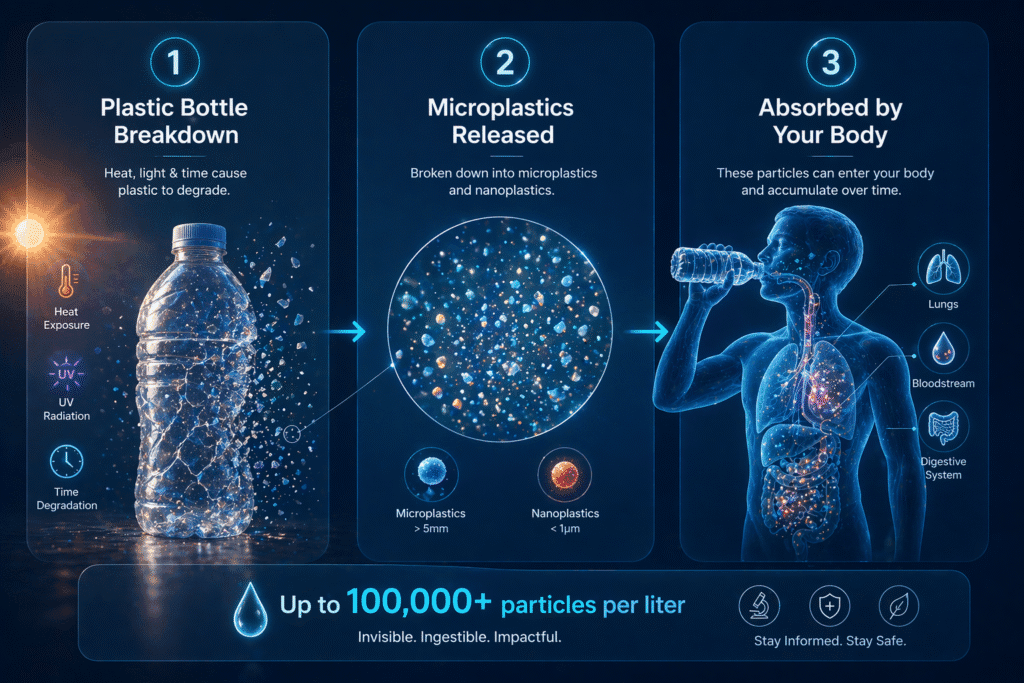 Microplastic in Water: Is Bottled Water Really Safe in 2026?
But What About Tap Water?
Your tap water is the unsung hero of this story. Most municipal water goes through rigorous testing, and it usually contains fewer microplastics than bottled water. I know, I know—it feels less glamorous.
But here’s the fun part: you can upgrade tap water yourself. A simple carbon filter pitcher (like Brita or Pur) removes chlorine, tastes, and many bigger particles. It’s like giving your tap a tiny spa day.
If you’re really into it, get a countertop reverse osmosis system. They’re like a bouncer at a club, kicking out almost everything unwanted. Your water will taste so clean, you’ll wonder why you ever paid for bottles.

