First, let’s get the villain straight. Hard water is basically regular H₂O that’s been hanging out with too many calcium and magnesium minerals underground. It’s the guy at the party who won’t stop bragging about his rock collection—annoying, but not dangerous.
Those minerals love to cling to everything: your pipes, your coffee maker, your hair. They create scale buildup that kills appliances and makes soap form that scummy curd instead of a nice lather. Lovely, right? (Side note: if your soap feels slimy instead of foamy, that’s hard water cheating you out of a proper scrub.)
Enter the Salt: The Big Swap
This is where the salt steps in, but not the kind you sprinkle on french fries. Water softener salt is usually sodium chloride or potassium chloride in big, chunky pellets or blocks. It doesn’t “clean” the water—that would be too simple. Instead, it performs a sneaky chemical switcheroo.
Inside your water softener is a tank full of resin beads—tiny, negatively charged plastic beads that are like magnets for positive ions. When hard water flows through, those calcium and magnesium ions shout “Dibs!” and latch onto the beads. But the beads are already coated with sodium ions from the salt.
Here’s the magic: the resin beads prefer the hardness minerals over the sodium. So they release the sodium ions into the water and grab the calcium/magnesium instead. You get soft water (with a tiny bit of sodium), and the beads get full of the bad stuff. Talk about a fair trade—you lose the scale, but gain slightly salty water? It’s a deal.
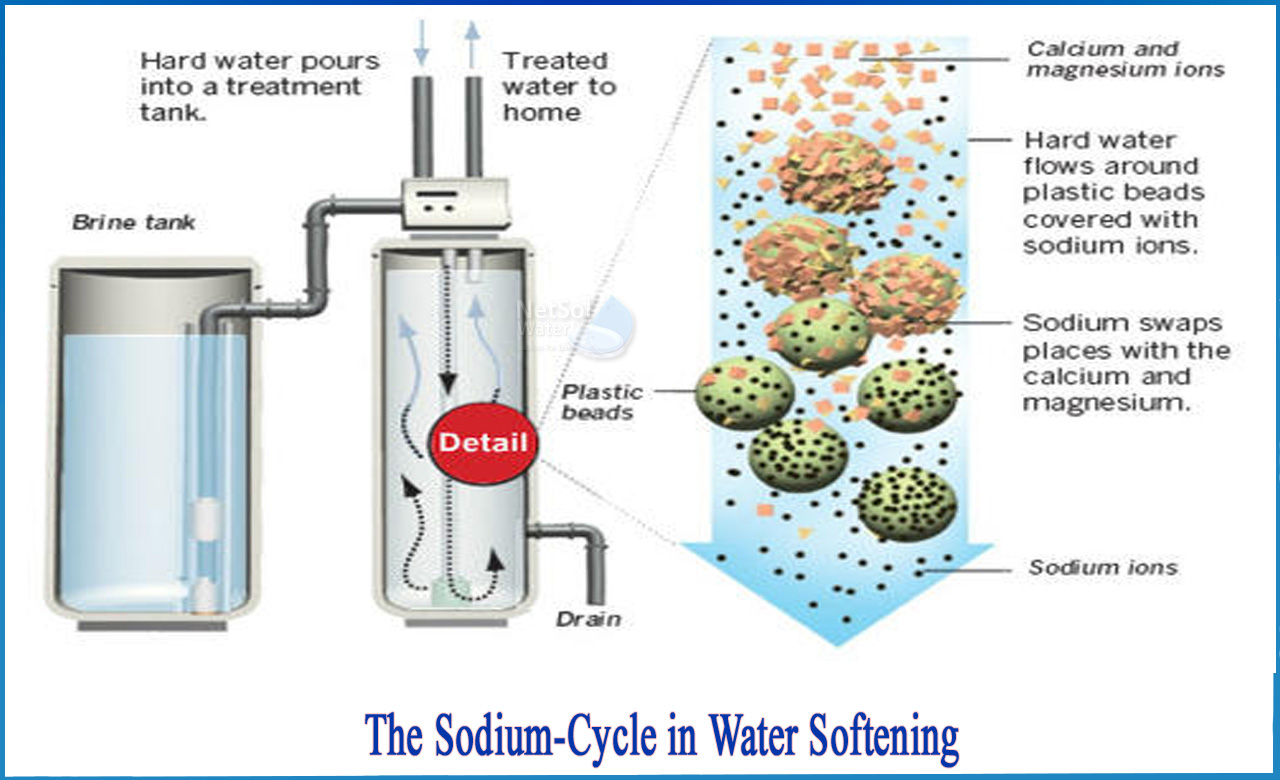 How Water Softeners Work Diagram Water Softener: Plumbing Water