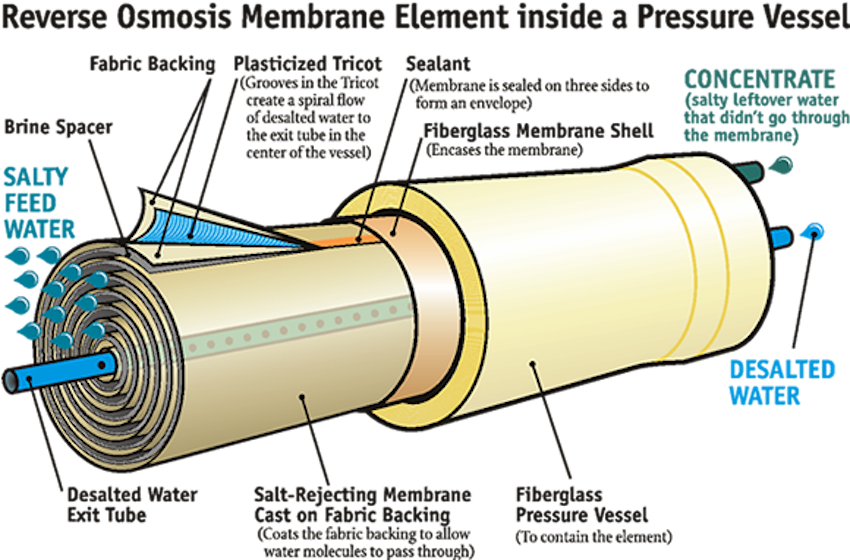
First, tap water comes in and hits a sediment filter. This removes dirt and rust—the big, lazy particles. If you skipped this step, your membrane would get clogged faster than a teenager’s door during a pop quiz.
Next, an activated carbon filter grabs chlorine and other chemicals that make water taste like a swimming pool. Chlorine is tough on membranes, so this gives the RO a fighting chance.
Now the real magic: water is pushed at high pressure through the RO membrane. Only about 10-20% of the water makes it through as “permeate” (fancy word for clean water). The rest—the “brine” or “concentrate”—gets flushed away with all the yucky stuff.
Finally, the pure water gets a quick polish through another filter to fine-tune the taste. Then it sits in a storage tank, ready for your thirsty face. And yes, that water is cleaner than most bottled stuff.
But Wait—Is RO Water Too Pure? (The Myth-Buster Corner)
You might have heard that RO water “steals minerals from your body.” Let’s squash that rumor like a bug: RO water is not a thief. Your body gets minerals from food—broccoli, nuts, steak—not from the brief sip of water you take.
In fact, RO removes bad stuff like lead, arsenic, and nitrates that can hurt you. If you’re worried, you can add a mineral cartridge to your system, but it’s totally optional. Think of it like putting sprinkles on a perfect ice cream—nice but not needed.
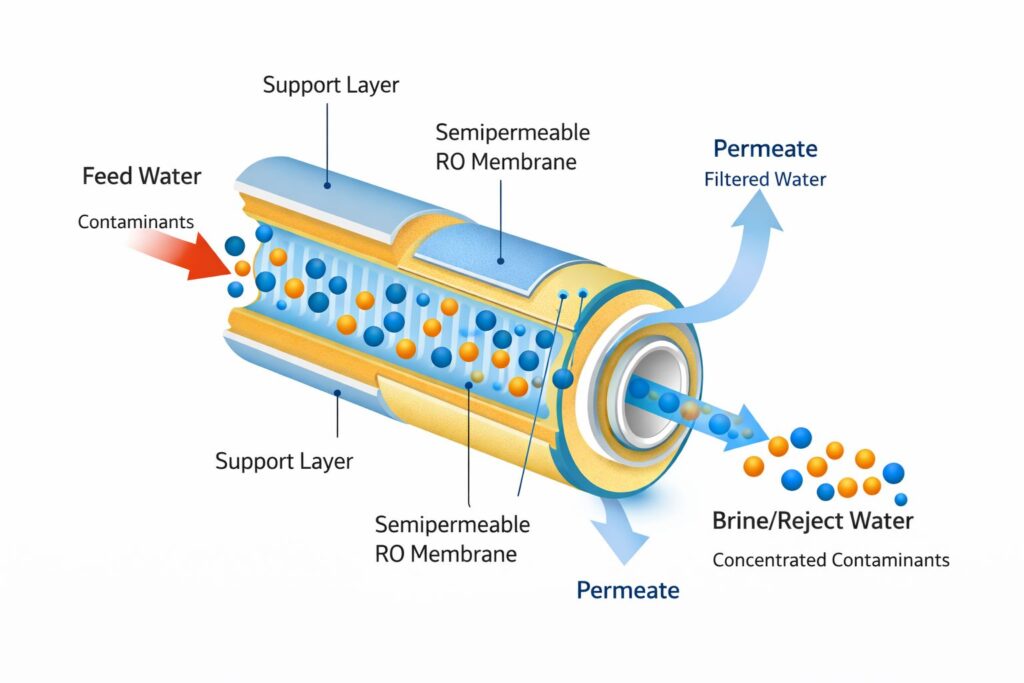 How Does a RO Membrane Work? | 4-Stage Process Explained
So, drink up! Your water is now a blank canvas, free of drama and contaminants.