
Let’s be real: One panel is not turning your home into a solar farm. A typical 100-watt or 200-watt panel covers, like, a laptop and a few lights.
On a cloudy day, it still works—just at 20-30% output. It’s like trying to sunbathe under a blanket. You’ll get some color, but you won’t be a bronzed god.
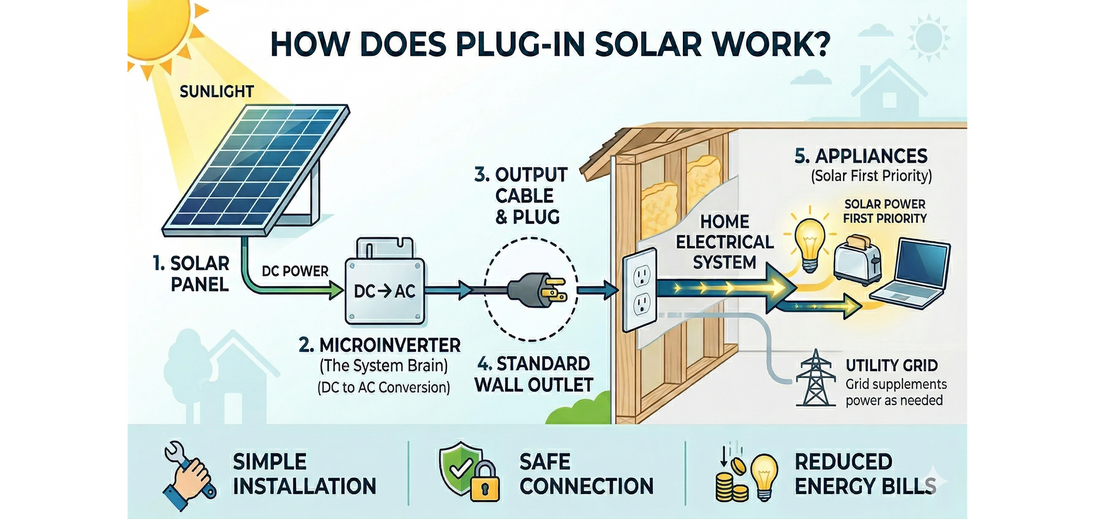 How Does Plug-In Solar Work? From Sunlight to Savings – OwnWatts
If you have energy vampires (old fridges, gaming PCs, crypto miners), one panel won’t even make a dent. But for a bedroom light, a phone charger, and some guilt relief? It’s gold.
The “I’m Not a Nerd” Installation
You literally just unbox it, set the panel in your yard or on a balcony, and plug it in. The manual is four pages, half of which are warnings about not juggling the panel.
Pro tip: Don’t plug it into a power strip or extension cord. Straight into the wall, baby. The microinverter needs a clean connection, and your strip might catch fire—the bad kind of drama.
Also, keep it out of the rain unless it’s rated waterproof. Most are, but check the sticker. You’re not a duck.

