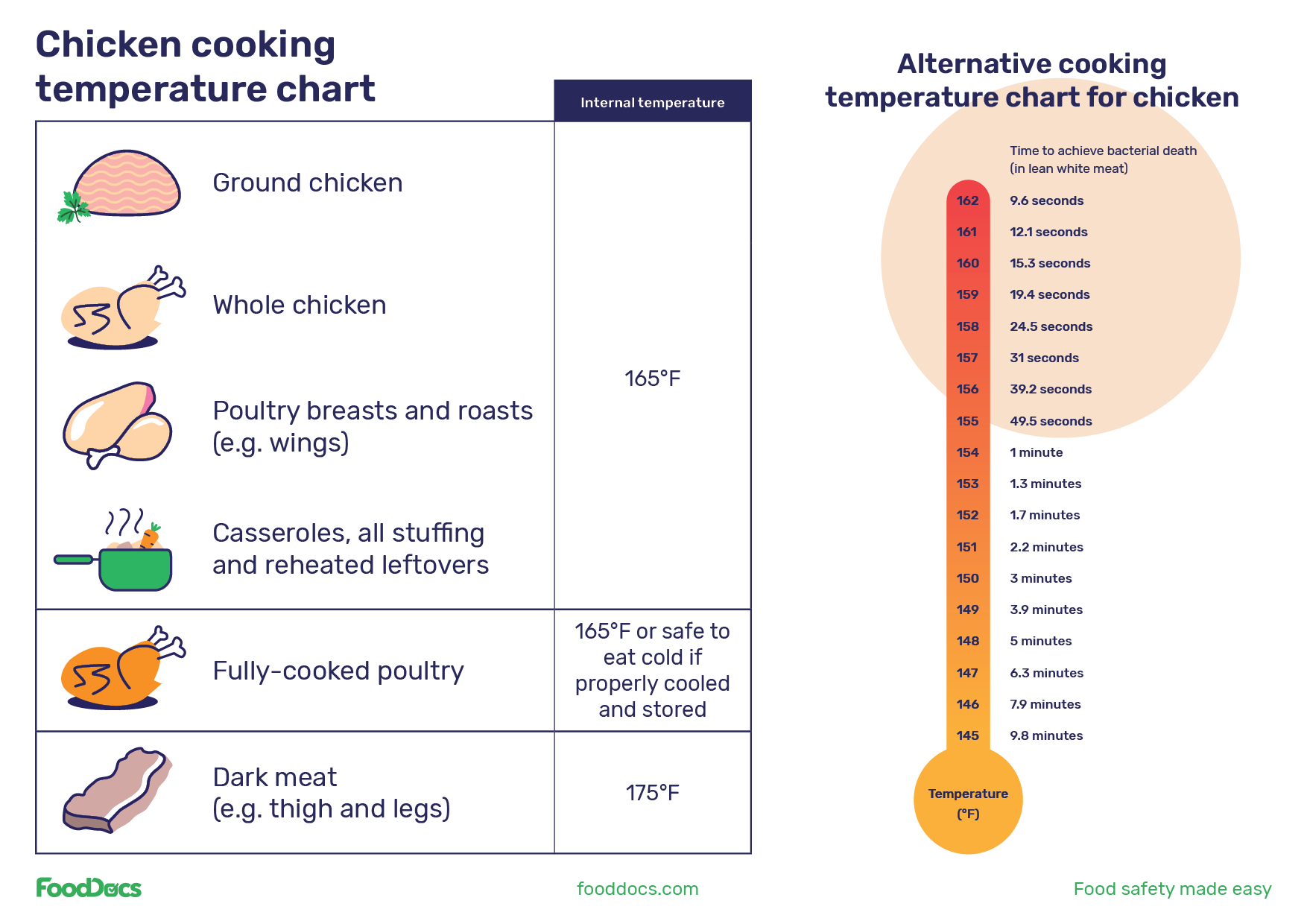
The gold standard for perfectly cooked chicken is 165°F (74°C) in the thickest part of the meat. This is the USDA’s official safe zone, where harmful bacteria are instantly obliterated. But here’s the fun part: that number is just the beginning of your adventure, not the finish line.
Why? Because different cuts of chicken behave like wildly different personalities. A plump chicken breast is a shy, lean introvert, while a fatty, bone-in thigh is a bold, forgiving extrovert. Knowing when to pull them off the heat is the secret to making dinner feel like a victory lap, not a chore.
White Meat: The High-Maintenance Friend
Boneless, skinless chicken breasts are the divas of the poultry world. They have almost no fat, so they go from juicy to sawdust in about 30 seconds flat. Your goal is to hit 165°F, but here’s a pro-tip: pull them off the heat at 162°F. The residual heat will carry them up to that safe 165°F while keeping them tender.
Think of it like a hot pan that keeps cooking your food after you turn off the stove. This carryover cooking is your secret weapon against dryness. Use a reliable instant-read thermometer—not a timer, not a guessing game, not some ancient wrist-flick method your grandma taught you.
And please, for the love of all things delicious, let the meat rest for five minutes before slicing. This allows the juices to redistribute, so they end up on your plate instead of all over your cutting board.
Dark Meat: The Forgiving, Flavorful Buddy
Now, let’s talk about thighs and drumsticks—the unsung heroes of the chicken world. These cuts are packed with fat and connective tissue, which means they are remarkably forgiving. In fact, you can cook dark meat all the way to 175°F or even 185°F without it drying out.
 Poultry Temperature Chart Sous Vide Chicken Guide | Sous Vide Chicken,
Why would you go higher? Because at that higher temperature, the collagen breaks down into gelatin, giving you that fall-off-the-bone texture that makes people moan at the dinner table. Don’t be afraid of a little extra heat here. It turns a simple thigh into a masterpiece of flavor and moisture.
So, if you accidentally overcook a breast, you’re in trouble. Overcook a thigh? You just made it better. Isn’t that a relief?

