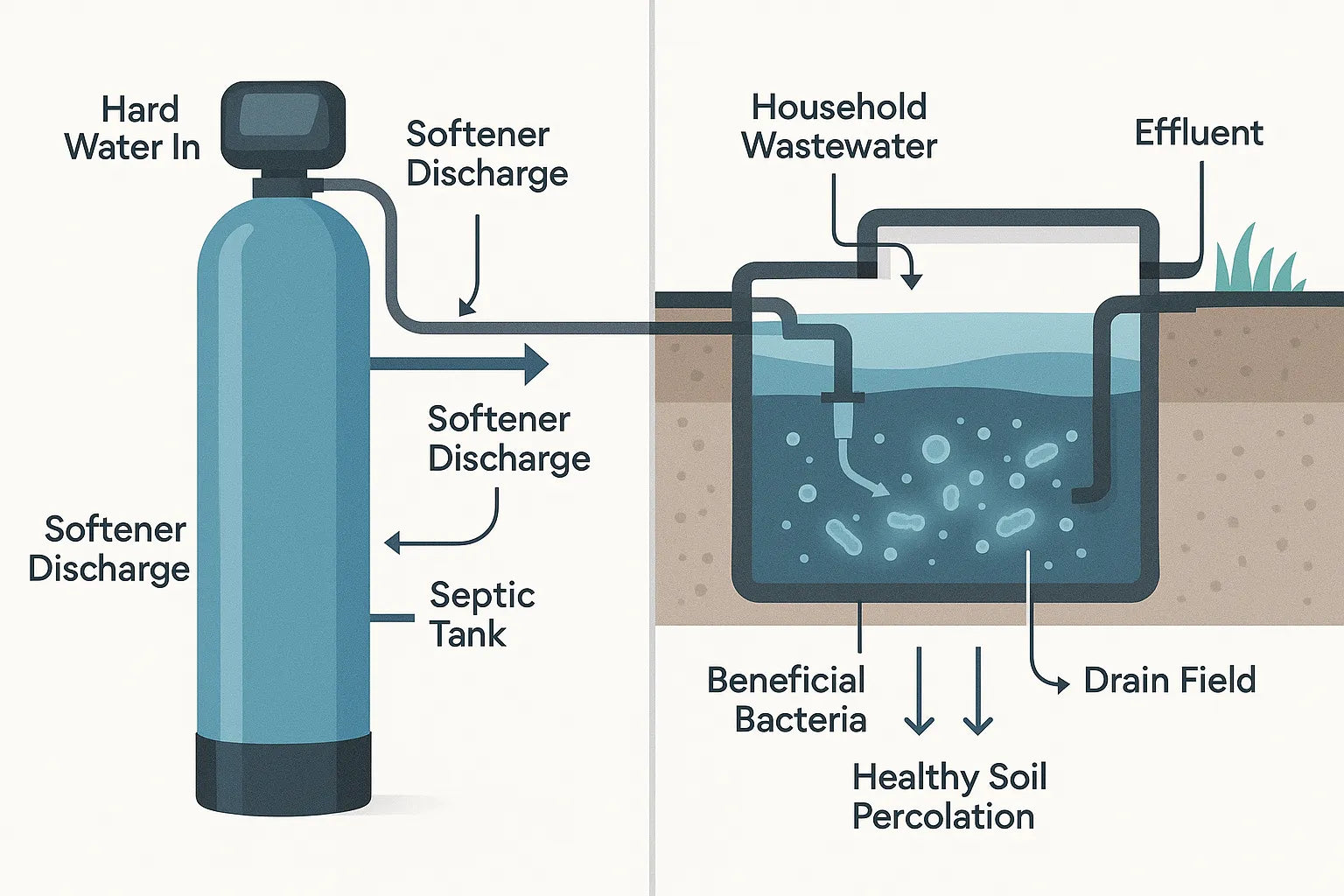
The good news? The answer is a resounding yes—when done right. Modern water softeners and septic systems can be best friends, not enemies. They’re like a dynamic duo for your home’s plumbing and your laundry’s softness.
But let’s dig a little deeper, shall we? The worry usually centers on one thing: salt. Specifically, the brine discharge from the softener’s regeneration cycle. Does it harm the delicate bacterial balance in your septic tank?
The Bacteria Fiesta
Your septic tank is a bustling party of good bacteria. They break down solids, and they’re tough little critters. Research—like that from the University of Minnesota and the Water Quality Association—shows that typical salt levels from a well-maintained softener don’t disrupt this microbial bash.
In fact, many studies found no significant impact on a septic system’s function. The salt concentration gets diluted by the regular flow of household water. So your bacteria stay happy, and your water stays silky smooth.
What About Water Volume?
Here’s where your system gets a little more fun. Softeners do add a bit of water to your septic tank during regeneration. But think of it like a gentle, extra rinse for your system—not a flood. A modern, demand-driven softener only regenerates when needed, using far less water than older models.
Pro tip: If your septic system is properly sized, this extra volume is a non-issue. It’s like giving your tank a tiny, helpful hydration boost. No bursting at the seams here!

